Most plants that decide to move batch records off paper start by listing every product, every line and every record type. The list gets long, the plan gets longer, and a year later the first electronic batch has still not run.
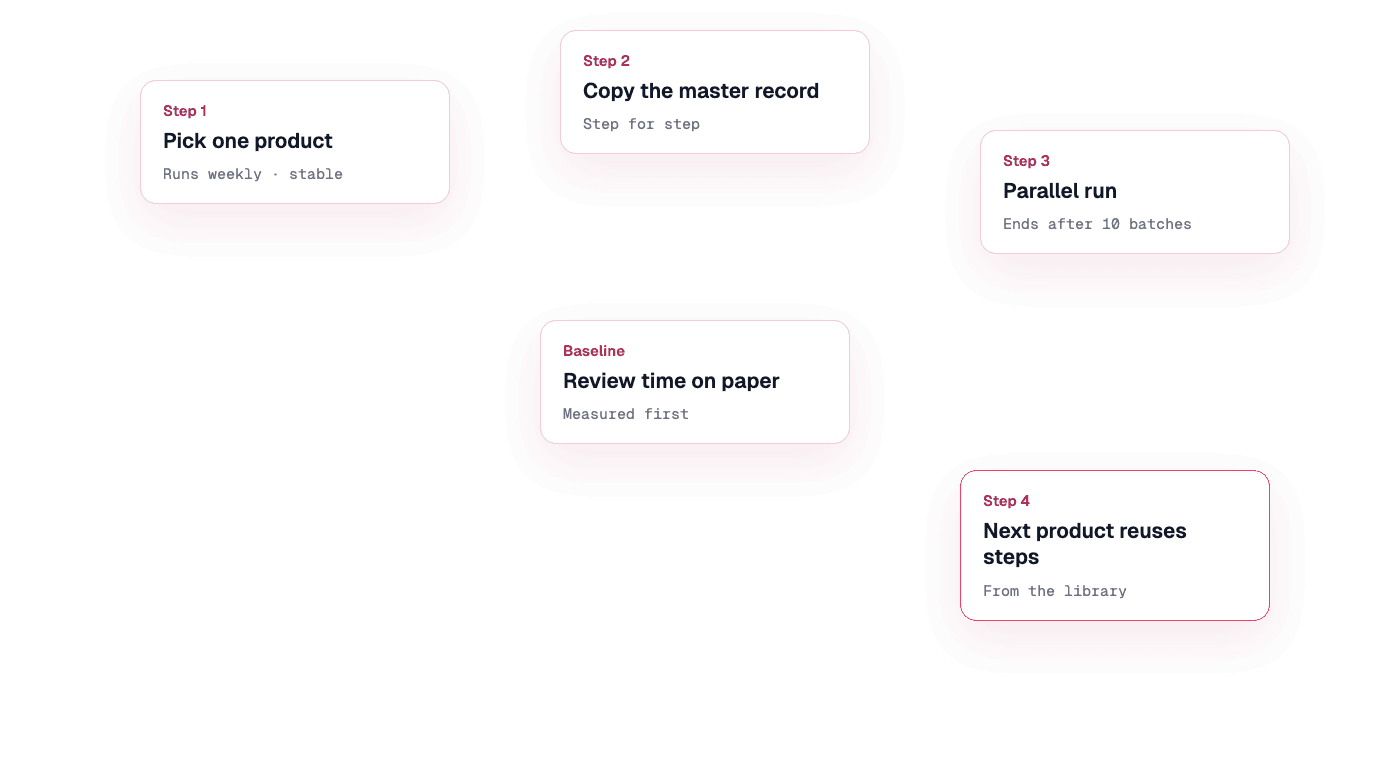
A smaller start works better. Pick one product, run it electronically on one line with one team, and learn from it before you widen.
How to pick the first product
The first product sets the pattern for the rest, so pick one that teaches you the most with the least risk:
- Made often. A product that runs every week gives you enough batches to learn from in a month.
- Stable process. Avoid a product with open changes or a validation in progress.
- Typical steps. Dispensing, a granulation or blending step, compression or filling, in-process checks. If the first record covers the common steps, most later records reuse them.
- A team that wants it. One supervisor who asks for the change is worth more than a perfect product choice.
What to move first
Move the master record as it is. The first goal is an electronic record that matches the approved paper one, step for step. Improving the process at the same time mixes two changes, and when something goes wrong you can't tell which one caused it.
Keep a short list of improvements you notice while you build it. Those become the first change after go-live.
Run paper and electronic side by side, briefly
For the first few batches, many plants keep the paper record as the official one and run the electronic record in parallel. It catches gaps in the electronic version before it carries the batch. Set a clear end: a number of batches, or a date, after which the electronic record is the record of truth. Without an end date, the parallel run becomes permanent and people fill in two records.
What to measure in the first month
Pick a few numbers you can compare with the paper record:
- Review time per batch, from record received by QA to review complete
- Documentation errors found in review
- Corrections sent back to the floor
- Time from last operation to release
Write down the paper baseline before you start. Without it, you can only say the new record feels faster.
Widen with a template
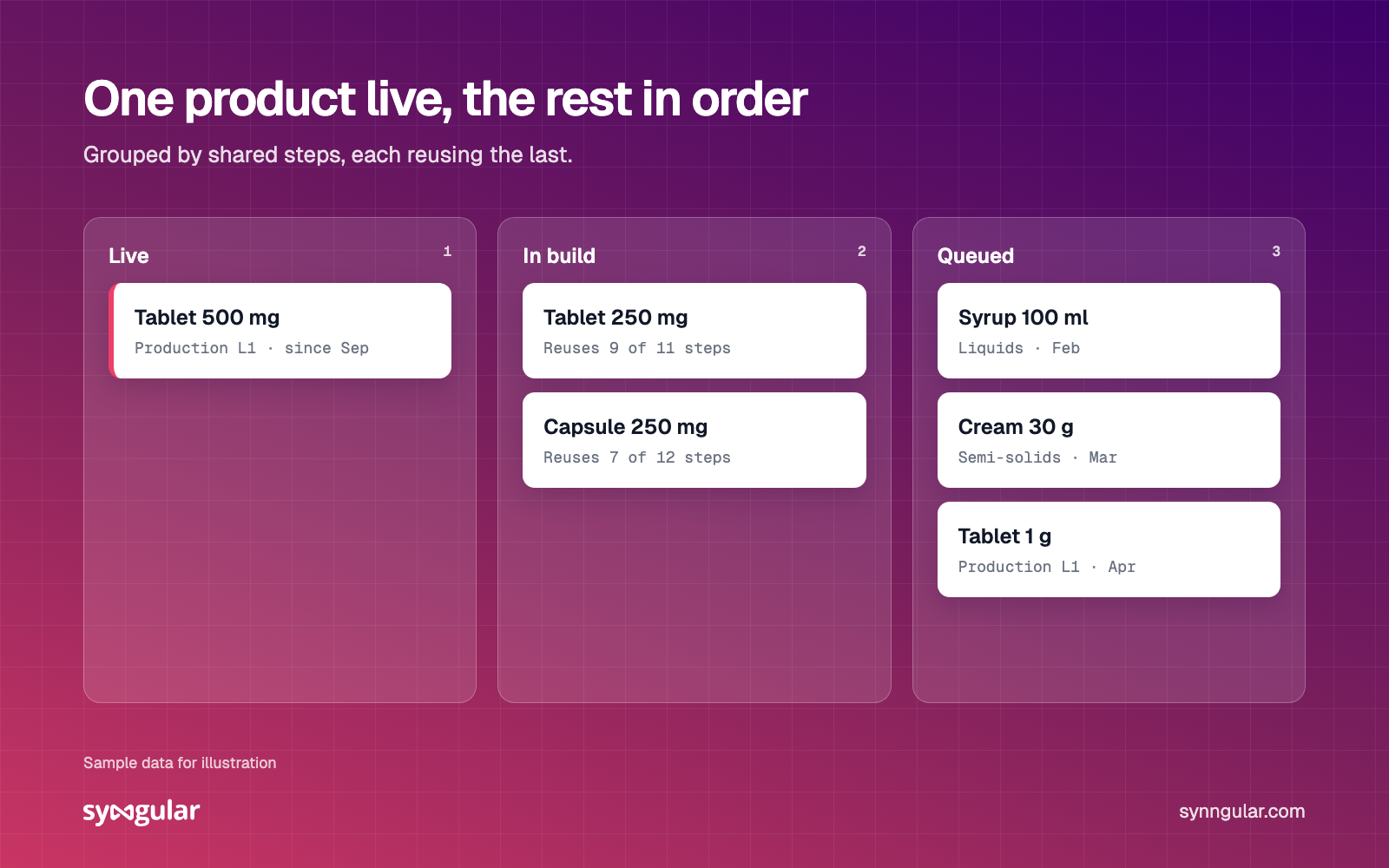
Once the first product runs, the next one goes faster because most of its steps already exist. Group the remaining products by shared steps and move them in that order. Each group adds a few new steps to the library and reuses the rest.
Our platform is set up for this order of work: masters and step libraries first, then one product at a time.
If you are planning a move off paper and want to talk through which product to start with, get in touch.