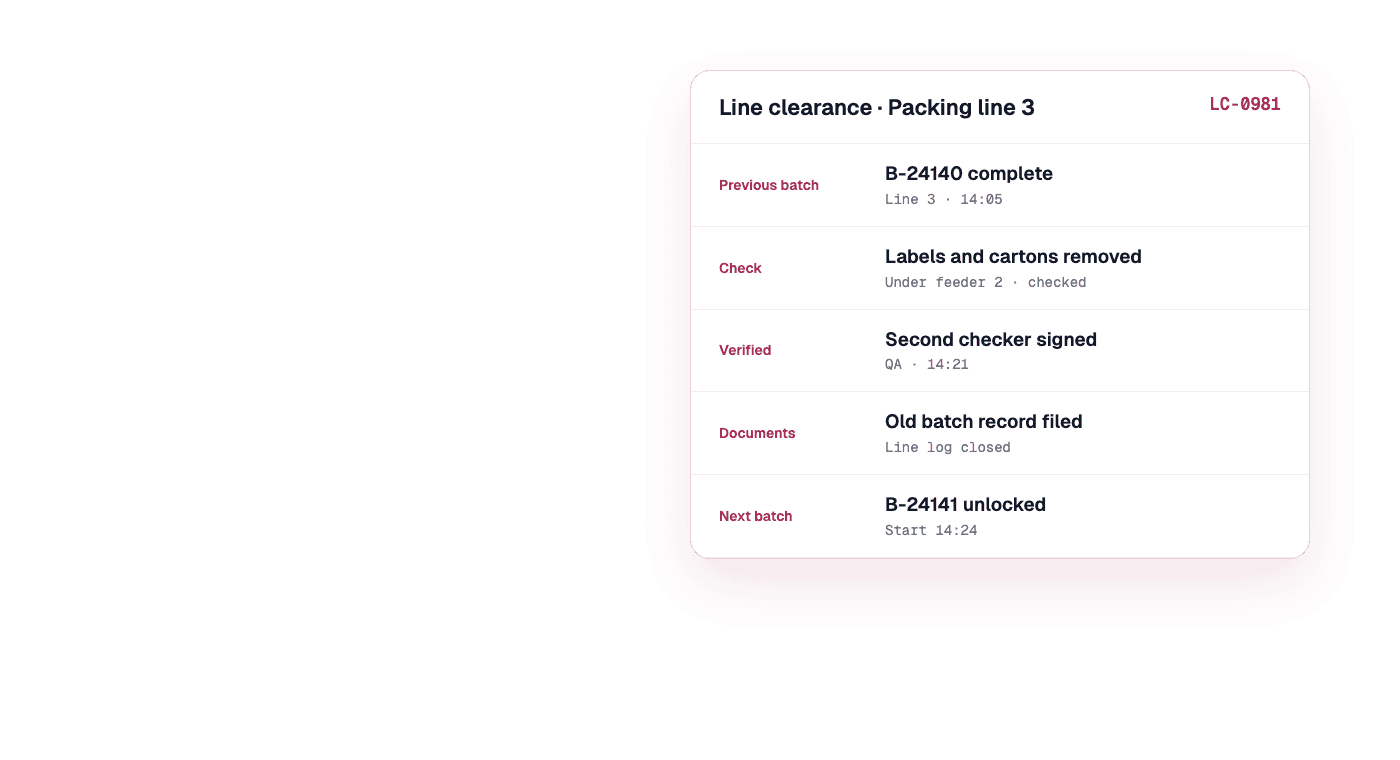
Before a new batch starts on a line, someone confirms that nothing from the last batch is left behind: no tablets in the hopper, no labels in the bin, no printed cartons on the bench, no batch record from yesterday on the table. Then a second person checks and signs.
It takes ten minutes. It protects against a mix-up, where product, labels or packaging from one batch end up in another. Mix-ups lead to recalls, and they are hard to explain to an inspector because the control that should have caught them is so simple.
What a good check covers
A line clearance checklist works when it names the specific places things hide on that line. A generic list ("area clean, no previous material") gets ticked without anyone looking. A useful list covers four groups:
- Materials. Leftover product, intermediates, rejects, samples, and anything in the waste bins.
- Printed items. Labels, cartons, leaflets, foils, and printed overprint plates. One stray label or carton is all a packaging mix-up needs.
- Documents. The previous batch record, line logs and status labels.
- Equipment. Hoppers, chutes, feeders, guides and the spots under and behind them that operators can't see from standing height.
For each line, list the spots where material has been found before. Your deviation history tells you where those are.
Where it slips
The check itself rarely fails on paper. The signatures are there. It slips in the conditions around it:
- Time pressure. The next batch is late, the shift is ending, and the check becomes a walk-past.
- Same product, next batch. When the next batch is the same product, people relax because "it's the same tablet". A different strength or a different market label still counts as a mix-up.
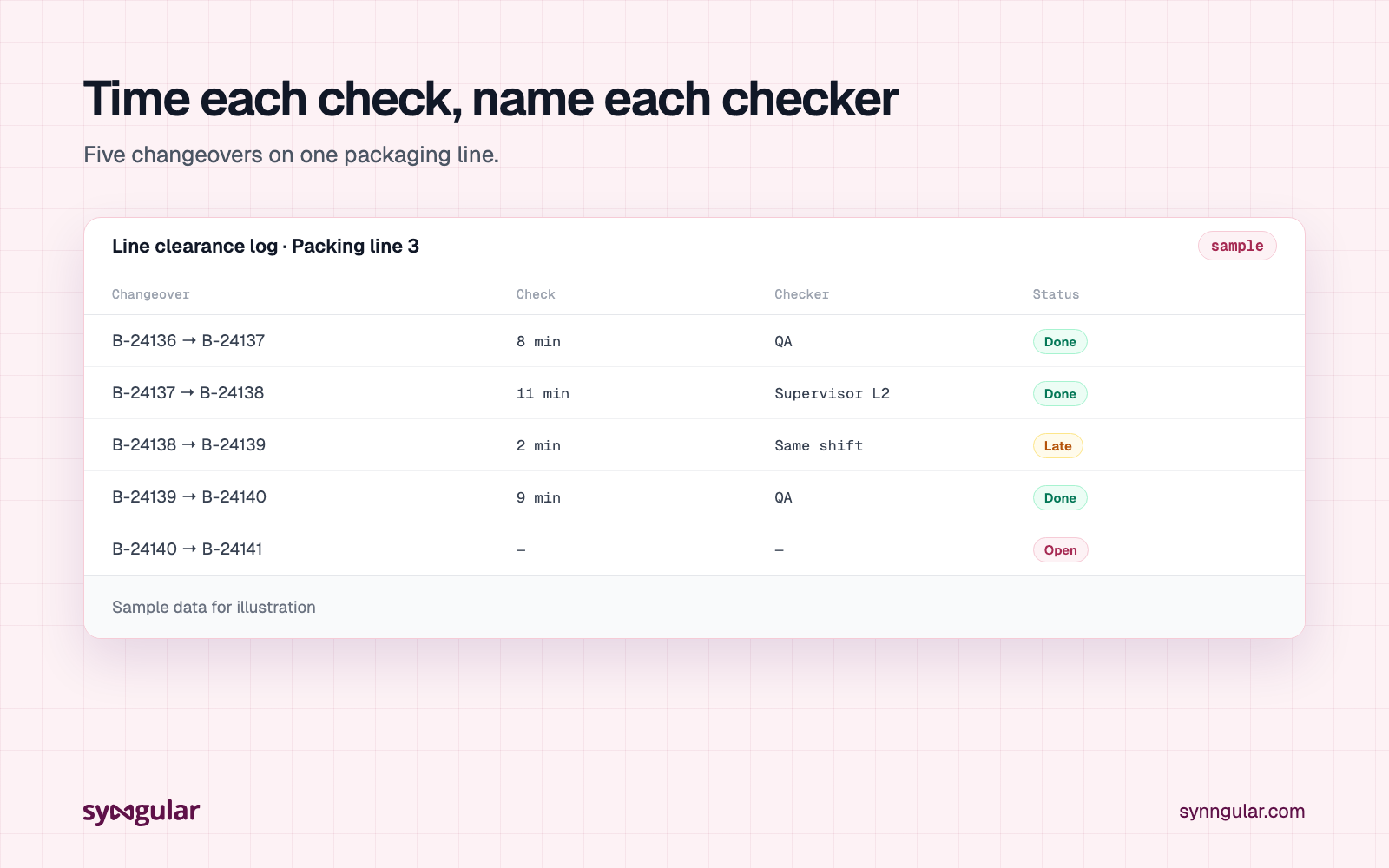
- Second checker on the same team. The person verifying often worked the same shift and saw the line the same way.
- Signing before checking. The record is signed at the start of the check, not the end.
Make it hold up on a busy shift
- Make the list line-specific. Name the places. "Under feeder 2 guide rail" beats "equipment clear".
- Record the time of the check and the batch start. A clearance signed one minute before the batch starts tells you how thorough it was.
- Use a checker from outside the line where you can. QA or a supervisor from another area sees the line with fresh eyes.
- Block the start. The next batch should not be able to start in the record until the clearance is complete and verified. On paper that means the first page of the next batch record asks for the clearance reference. In an electronic record, the step stays locked.
Use your own history
Pull every deviation from the last two years that mentions line clearance, mix-up or wrong label. For each one, ask which item on today's checklist would have caught it. If none would, add it. If one should have and didn't, look at the conditions above.
This is the kind of check our gated batch execution is built for: the next step stays locked until the clearance is done and verified, with the time and the people on record.
If you'd like a second look at your line clearance checklist, send it to us.