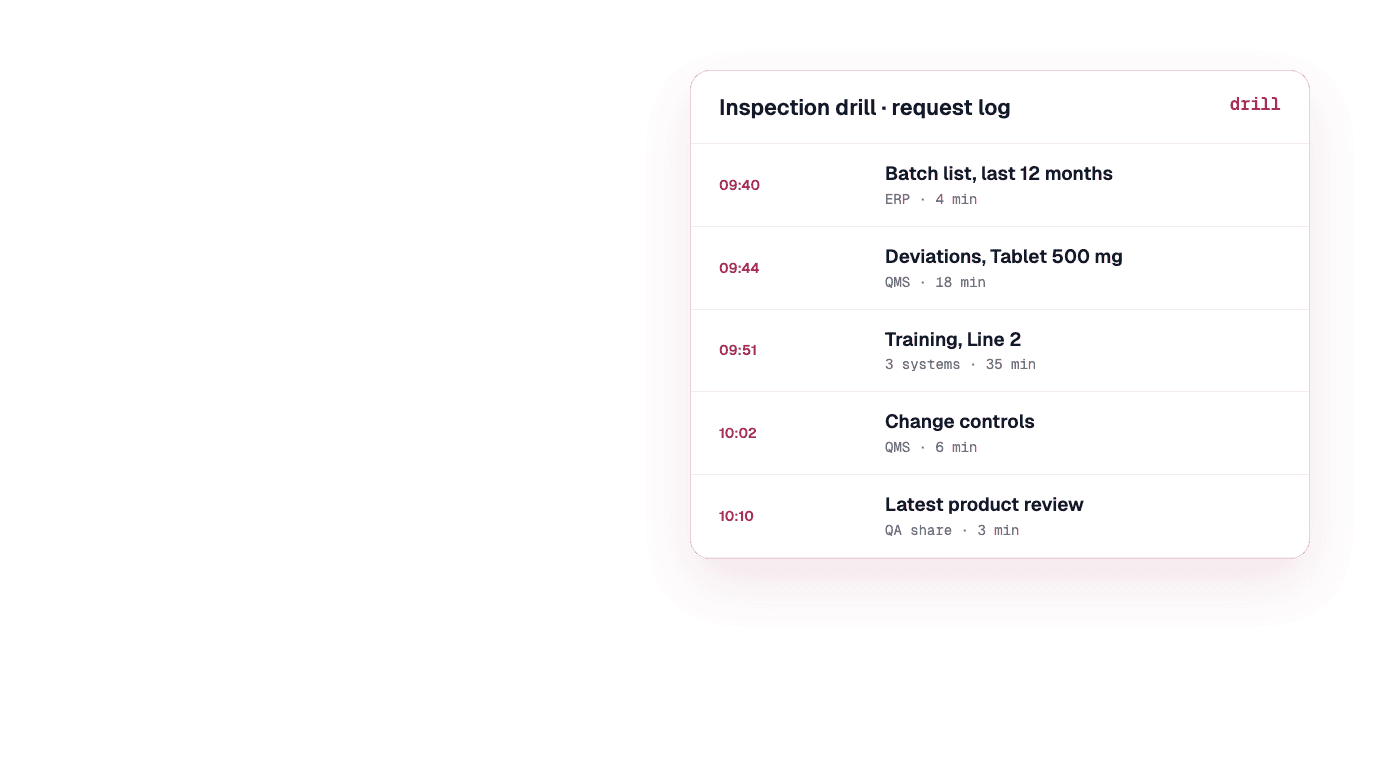
The opening meeting ends, and the requests start. A list of batches made in the last year. The deviations for one product. The training records for the people on a particular line. The change controls since the last visit.
None of these are surprises. Every inspection starts with some version of this list. Yet in many plants the first hour is spent finding things, and the inspector watches you do it.
What gets asked for early
The exact list depends on the inspector and the reason for the visit, but the early requests tend to come from the same families:
- Batch history. Batches made and released for a product or period, with any rejected or reprocessed batches.
- Deviations and CAPA. Open and closed deviations, and the CAPA linked to them.
- Changes. Change controls approved since the last inspection.
- Out-of-specification results. OOS investigations and their outcomes.
- Complaints and recalls. Product complaints, and any recalls or market actions.
- People. The organisation chart, and training records for named roles.
- Product reviews. The latest product quality review for products of interest.
Time yourself
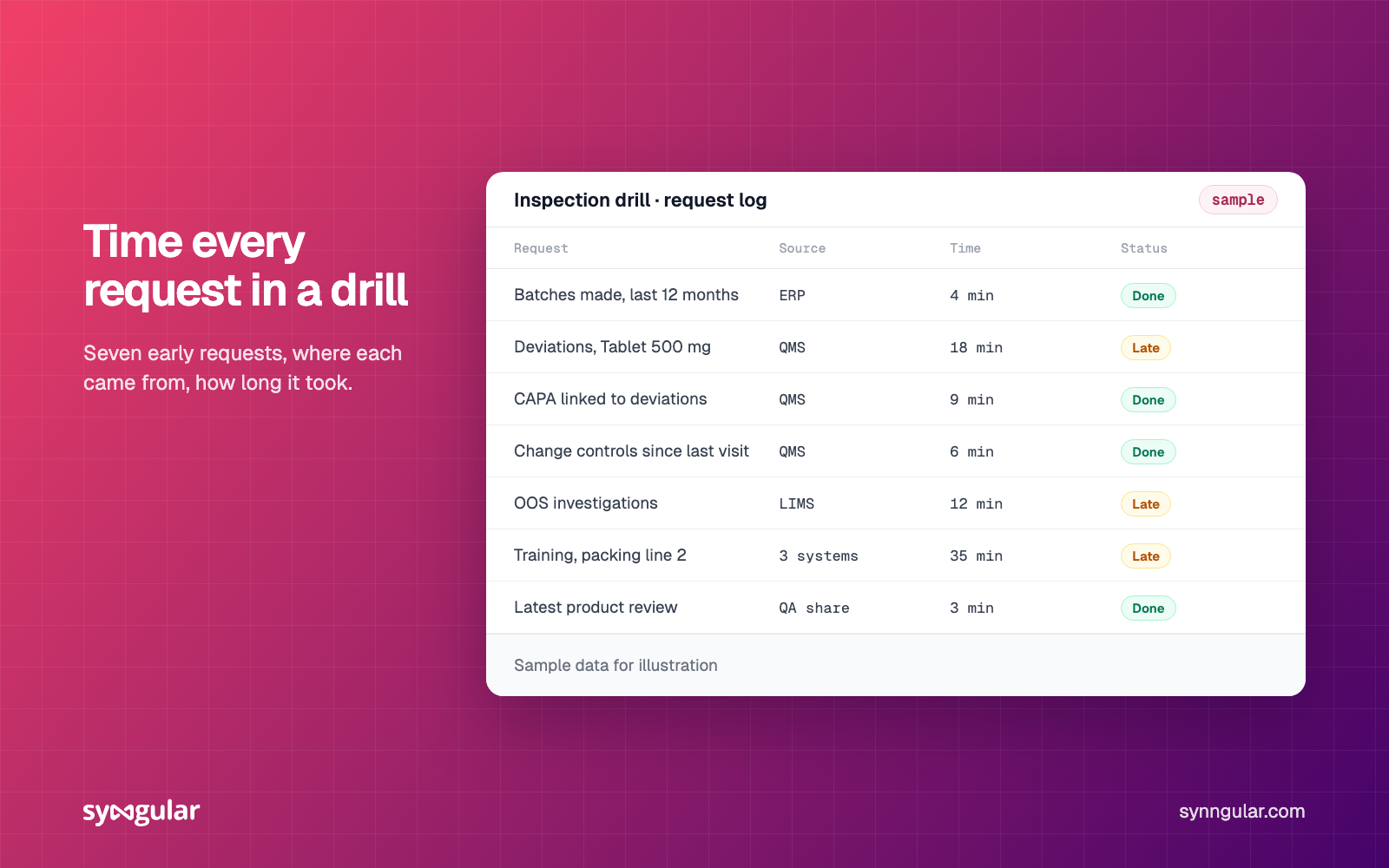
Run the list as a drill with your team. For each request, time how long it takes from the question to a clean copy on the table. Note who had to be called, which system it came from and whether anything had to be re-typed.
The drill shows you two kinds of problems. Some documents take long because they live in many places. Others are quick to find but come out messy: a deviation list with open items nobody can explain, or a training record that's out of date. The second kind matters more, because the inspector reads what you hand over.
Fix the slow ones before the visit
For each request that took more than a few minutes:
- Decide who owns it and where the current version lives.
- Agree the format you'll hand over, so nobody builds it on the spot.
- Re-run the drill a month later and compare times.
For the messy ones, the fix is in the underlying work: close or explain the old deviations, update the training matrix, finish the overdue review.
Keep a front room and a back room
Many plants run an inspection with two teams. The front room sits with the inspector. The back room finds documents, checks them and sends them forward. The drill tells you how many people the back room needs and which systems they must be able to reach.
It also tells you which questions the front room can answer on the spot. When you can pull a batch's full history in a minute, you answer the question instead of promising a document later.
Our audits and product review workflow is built for this: one audit trail per record, and evidence pulled with its sources when you ask.
If you run the drill and want to compare notes, write to us.